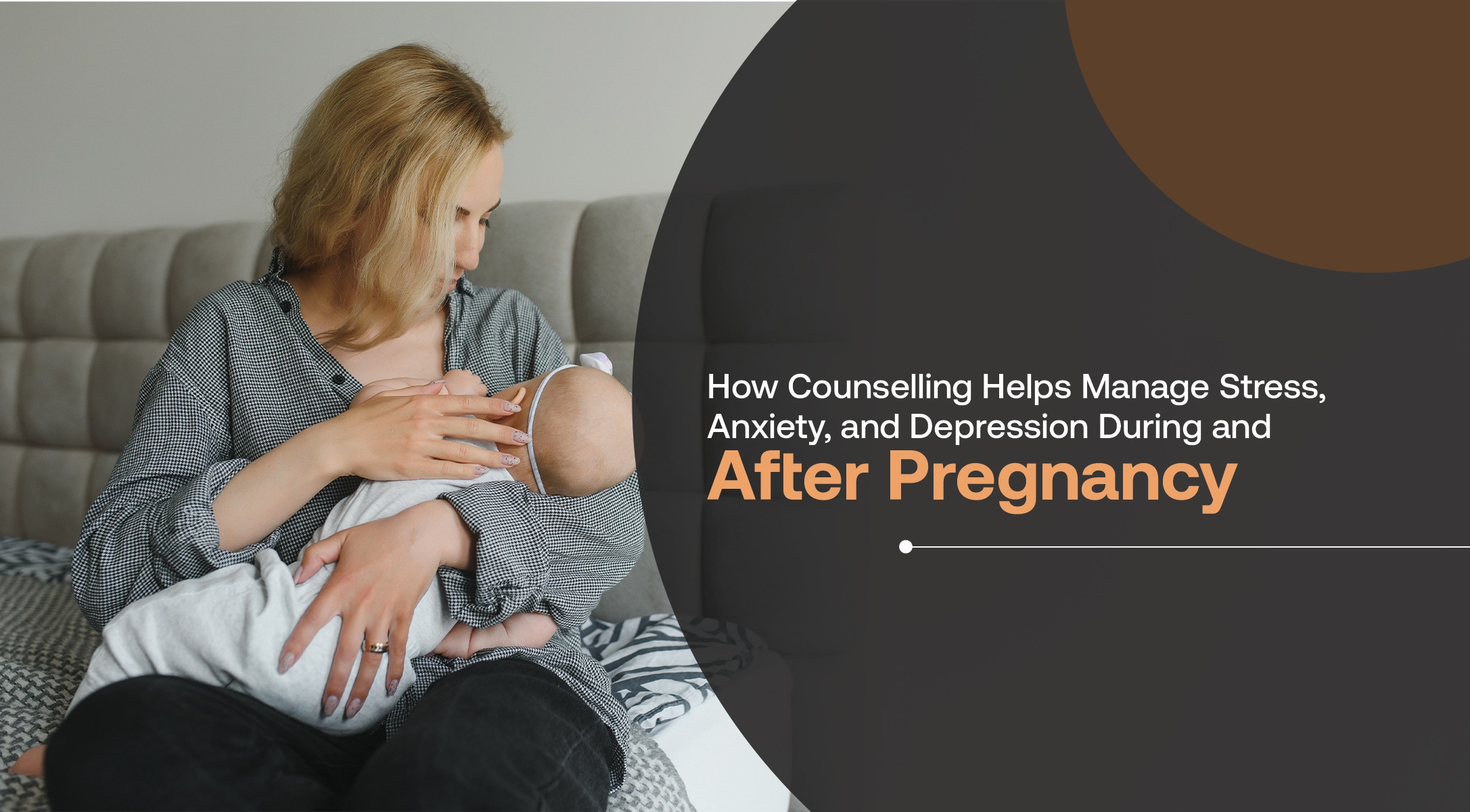
Pregnancy is usually shown as this very happy, glowing phase in life. Everybody talks about baby shopping, cute names, tiny clothes, and all that. And yes, those moments are special. But pregnancy and motherhood can also feel emotionally exhausting.
You may feel excited and emotional one day, and suddenly, you may feel anxious, irritated, tired, or completely overwhelmed for no proper reason. And the difficult part? Many women feel guilty even admitting this out loud.
At Miracle Minds, we meet many women who quietly carry stress, anxiety, fear, and emotional burnout during pregnancy and after delivery. Some feel they are “overreacting.” Some think they should just manage somehow. But emotional struggles during motherhood are very real.
That’s why Prenatal and Postnatal Psychological Counselling in Kakkanad, Kochi, Kerala, is becoming so important today.
In this blog, we’re going to talk openly about the emotional side of pregnancy and motherhood, the stress, anxiety, overthinking, postpartum depression, relationship pressure, all of it. We’ll also see how counselling actually helps in real life.
Pregnancy Changes More Than Just the Body
Most people focus only on physical health during pregnancy. Doctor visits, scans, vitamins, sleep, diet.
But emotional health? That often gets ignored.
Actually, many women say the emotional side is harder than they expected.
Your body changes. Hormones change. Sleep changes. Relationships change. Suddenly, everybody gives advice. Sometimes helpful, sometimes not really.
And slowly, all this pressure builds up.
Some women experience:
• Constant worrying about the baby
• Fear of delivery or labour pain
• Mood swings and irritation
• Overthinking small things
• Feeling emotionally tired all the time
• Crying suddenly without understanding why
• Feeling lonely even with people around
• Fear of becoming a “good mother.”
• Panic and racing thoughts
These feelings are much more common than people openly talk about.
Understanding Prenatal and Postpartum Depression
Prenatal Depression
Prenatal depression happens during pregnancy.
Many women don’t even realise they are going through it because everybody around them expects them to feel happy and grateful all the time.
But real life doesn’t work like movies, right?
Some women feel constantly anxious, emotionally drained, hopeless, or disconnected during pregnancy. And when these feelings continue for weeks, proper emotional support becomes important.
Postpartum Depression
Postpartum depression happens after childbirth. It is more serious than the usual “baby blues” many mothers experience for a few days.
A mother may feel:
• Constant sadness or emptiness
• Anxiety or panic
• Emotional numbness
• Difficulty bonding with the baby
• Guilt or hopelessness
• Lack of sleep or appetite
• Emotional breakdowns
• Extreme mental exhaustion
Postpartum depression is still misunderstood in many families. People may say things like, “All mothers go through this” or “You just need rest.”
But when emotions start affecting daily life, mental health support really matters.
How Counselling Actually Helps
Good counselling feels more like having a safe space where you can finally breathe a little and speak honestly without being judged.
A trained Counselling Psychologist in Kakkanad, Kochi, Kerala can help mothers understand their emotions better and learn healthier ways to cope.
And, sometimes just being heard properly itself feels healing.
1. It Gives Emotional Support
Many women silently keep everything inside because they don’t want others to think they are weak or “bad mothers.”
In counselling, they can openly say things like:
• “I feel emotionally exhausted.”
• “I don’t feel like myself anymore.”
• “I’m scared I can’t handle motherhood.”
• “I feel guilty all the time.”
These emotions are valid. Talking about them openly reduces emotional pressure a lot.
2. It Helps Manage Anxiety and Overthinking
The list of problems that comes with pregnancy is endless.
Is the child going to be fine?
Are the deliveries going to be easy?
Am I able to cope with all of this?
All this stress that one experiences mentally can prove to be exhausting.
By undergoing Prenatal and Postnatal Psychological Counselling in Kakkanad, Kochi, Kerala, the mother acquires helpful coping mechanisms such as:
• Relaxation Techniques
• Breathing Exercises
• Mindfulness
• Emotion Regulation
• Stress Management
It may seem simple, but it really does make a difference.
3. Counselling Helps Identify Depression Early
Sometimes women think emotional struggles are “normal pregnancy emotions” and ignore them for months.
But when sadness, anxiety, hopelessness, or emotional exhaustion continue for a long time, early support becomes important.
Counselling helps identify emotional warning signs before things become more severe.
4. It Builds Confidence in Motherhood
New mothers doubt themselves constantly. That’s very common.
Social media also adds pressure sometimes. Everything online looks perfect, perfect mothers, perfect routines, and perfect babies.
Real life is not like that.
Counselling helps mothers develop realistic expectations and slowly trust themselves more.
5. It Improves Relationships and Family Support
Pregnancy and childbirth can sometimes create emotional tension at home.
Lack of sleep, stress, responsibilities, mood swings, all these things affect communication.
Counselling can help improve:
• Communication between partners
• Emotional understanding
• Family support
• Parenting expectations
• Conflict handling
When emotional support improves at home, mothers usually feel calmer and safer emotionally.
6. It Helps Women Adjust to Big Life Changes
Motherhood changes daily life completely.
Some women feel like they’ve lost their old routine, independence, or even a part of themselves.
And, adjusting to all these changes together is not easy.
A Counselling Psychologist can help women emotionally adjust in a healthier and more balanced way.
Warning Signs Not to Be Ignored
If you find yourself dealing with:
• Crushing sadness
• Terrible anxiety and panic attacks
• Becoming an emotional crybaby
• Emotional detachment
• Sleeping and/or eating problems
• Finding yourself emotionally distant from your child
• Endless feelings of hopelessness
• Extreme amounts of stress or feeling burnt out
Seeking help sooner rather than later will actually make recovery easier.
The Role of the Husband
Whereas the mother shoulders the physical weight of the process, it is scientifically proven that her husband serves as a “buffer” to mental issues that she may have in regards to her emotional state while pregnant.
1. Helping with the “Cognitive Load”
A mother is often prone to suffering from burnout because of “cognitive load” – thinking hard about the planning process.
•The Action: Take charge and do things within your designated spheres of control (buy groceries or set up an appointment for something) without having to be told to.
2. Empathic Listening and “Holding Space”
Scientific studies have shown that listening empathically and not trying to solve the problem right away reduces the mother’s level of cortisol (stress hormone).
•The Action: Don’t say, “Don’t worry,” but rather try this approach, “I understand why you’re overwhelmed.”
3. Checking for Warning Signs
Since mothers tend to become accustomed to being tired, husbands become the first to detect these clinical signs.
•The Action: Check for constant sleep disturbances, inability to eat, and lack of interest. Initial treatment begins with early detection.
4. Ensuring She Sleeps
One of the main triggers of postnatal depression includes insomnia.
•The Action: Set up a protected period of sleep, at least four hours without disturbance. Studies have shown that this may positively influence mood.
5. Playing “Guardian Role”
Maternal anxiety may be elevated by being exposed to many guests.
•The Action: Be her “social shield.”
Support from Family Matters Too
One caring conversation from a partner, friend, or family member can make a huge difference.
Sometimes mothers don’t need solutions immediately. They just need someone to listen without judging.
Family members can help by:
•Offering emotional reassurance
•Helping with household work
•Supporting baby care
•Encouraging counselling if needed
•Being patient and understanding
Small support matters more than people realise.
Emotional Support at Miracle Minds
At Miracle Minds, we believe emotional health during pregnancy and motherhood deserves proper attention.
Our Prenatal and Postnatal Psychological Counselling supports women dealing with:
•Pregnancy-related stress
•Anxiety and overthinking
•Prenatal depression
•Postpartum depression
•Parenting stress
•Emotional burnout
•Relationship concerns
Our experienced Counselling Psychologist in Kakkanad, Kochi, and Kerala provides a safe, supportive, and confidential environment where mothers can openly talk about what they are going through.
Every woman’s emotional journey is different. So we focus on support that feels personal, practical, and compassionate.
Psychotherapies for Maternal Well-Being
1. Interpersonal Psychotherapy (IPT)
IPT is regarded as the first-line therapy for perinatal depression. This form of psychotherapy rests on the assumption that psychological problems arise as a consequence of challenges encountered in people’s interpersonal relationships and life events.
•How it works: IPT takes care of the Role Transition role. It allows women to cope with social role adjustment, conflict resolution between partners or families, and strengthening social support.
•Major focus: Improvement of interpersonal communication and solving interpersonal conflicts leading to pregnancy-related stress.
2. Cognitive Behavioral Therapy (CBT)
CBT is very effective in controlling anxiety and intrusive thoughts (such as “what if I drop the baby”) that often arise during and after childbirth.
•What does CBT do?
It allows women to recognize cognitive distortions and irrational thinking patterns and replace them with rational ones.
•Behavior: Behavioral Activation and Exposure Therapy
3. Mindfulness-Based Cognitive Therapy (MBCT)
The MBCT integrates the CBT principles with practices such as meditation and deep breathing exercises.
•Why it is helpful: MBCT is specifically effective for avoiding depression relapse. This approach instructs pregnant women on how to “observe” their disturbing feelings and sensations in a way that does not overwhelm them.
•Basis: Being mindful in the current moment and limiting the “rumination” that typically causes prenatal anxiety.
4. Acceptance and Commitment Therapy (ACT)
ACT promotes accepting one’s challenging emotions instead of resisting them or feeling bad about experiencing them.
•Benefit: Many moms consider themselves “selfish” or “negative” when they experience sadness. Acceptance allows them to recognize that sadness is a temporary state and engage in activities that reflect their values (“Even though I’m feeling anxious today, I’ll go for a quick walk because being healthy is important to me”).
•Emphasis: Psychological flexibility and minimizing self-criticism.
5. Dialectical Behavior Therapy (DBT) Skills
Although the complete program is quite intensive, DBT-specific skills prove to be highly beneficial for “Emotion Regulation” and “Distress Tolerance.”
•Why it works: The program offers a pragmatic approach to handling the emotional “swings” due to hormone levels. It offers methods of “down-regulating” the system during a bout of rage or sadness experienced by a mother.
•Emphasis: Handling extremely intense emotions.
At Miracle Minds, we don’t just offer sessions; we provide a dedicated roadmap designed to support both parents through every step of this transformative journey. We believe that no mother or father should have to navigate the complexities of parenthood alone. Our approach is built on “holding your hands” from the very beginning—offering a continuous, compassionate presence that ensures your transition into parenthood is as smooth and emotionally secure as possible. By involving both parents in this guided journey, we help create a stable, harmonious foundation for your growing family.
Final Thoughts
Being a mother could be beautiful, emotional, perplexing, draining – or even all of the above!
You don’t need to get everything right.
Anxiety, stress, and depression pre- and post-pregnancy are very common and equally treatable. Counselling will offer emotional insight, coping mechanisms, support, and assurance during the most transformative period in your life.
If you or a loved one needs emotional assistance during pregnancy or after giving birth, consider reaching out to a professional to aid you in this situation.
At Miracle Minds, our focus is on empowering mothers and their families through mental health services and professional guidance.
Since mental wellness is crucial. Particularly during parenthood.
Frequently Asked Questions (FAQs)
1. What is prenatal and postnatal psychological counselling?
It is professional psychological care during pregnancy and after pregnancy. It helps pregnant women cope with their stress, anxiety, depression, feeling overwhelmed, and adjustment problems.
2. When should I go for counselling during my pregnancy period?
When you are feeling emotionally drained, anxious, persistently depressed, scared, or not able to deal with the situation, going to see a professional counsellor may be useful.
3. Is postpartum depression common?
Yes, it is way too common, but rarely talked about. Lots of new mothers are dealing with depression in silence, and counselling will be able to help you recover.
4. Does counselling help women who experience anxiety during pregnancy?
Yes, counselling helps women cope with excessive thinking, fears, anxiety, panic, and other emotions concerning pregnancy and motherhood.
5. Is the process confidential?
Yes, it is absolutely confidential and safe. All the sessions with our Counselling Psychologist will be entirely confidential and held in privacy.
6. Can husbands attend counselling sessions too?
Yes. At Miracle Minds, we encourage partners to join. When a husband understands the neurobiology of what his partner is experiencing, he can provide more effective support, which strengthens the relationship and speeds up recovery.