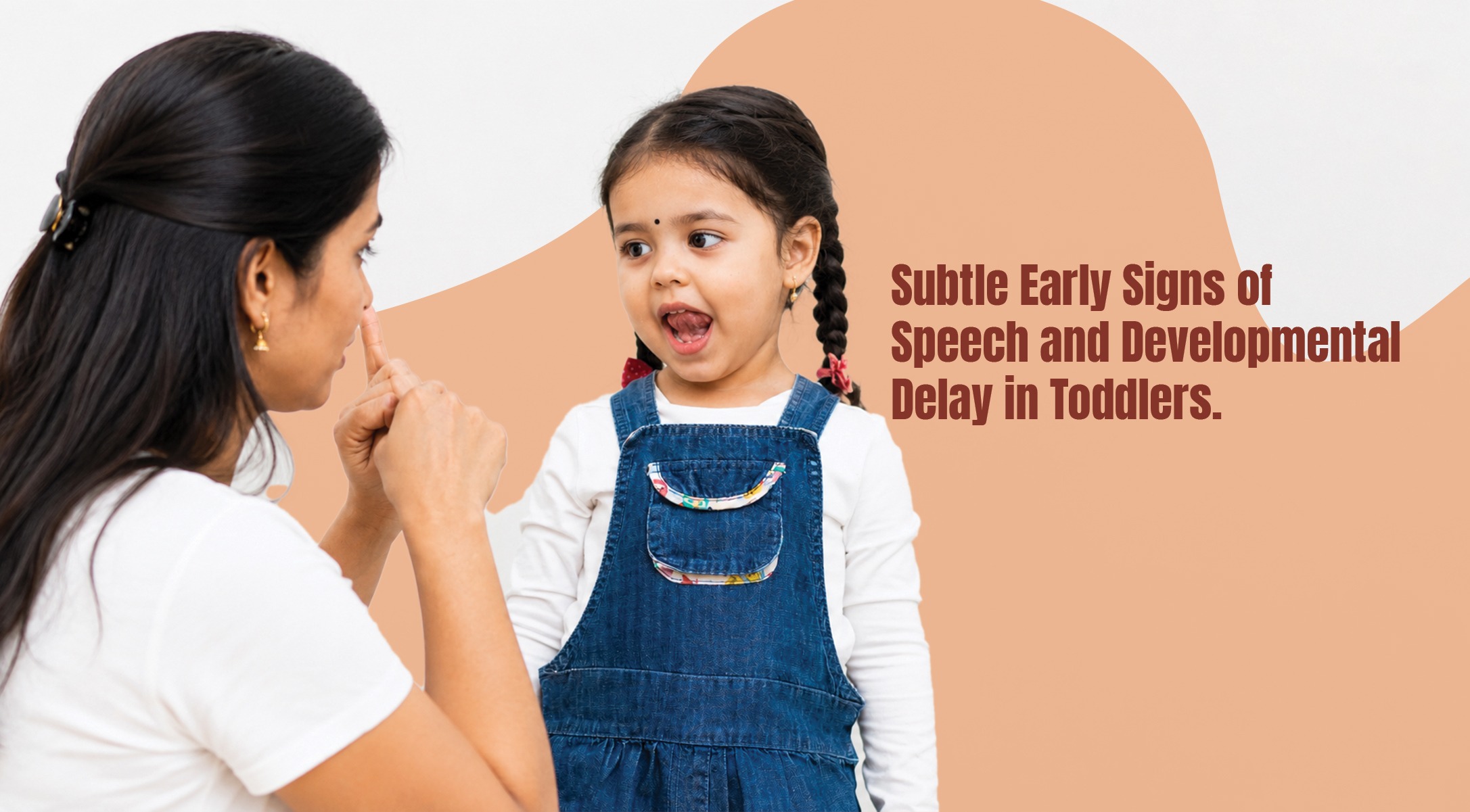
Watching your little one grow up is one of the nicest parts of being a parent. That first smile, first word, first wobbly step towards you- these things stay with you forever. At the same time, let’s be real, most parents can’t stop comparing. You see the neighbour’s kid talking in full sentences, and suddenly you’re wondering, “Is my child okay? Am I missing something?”
This comparison game is very natural. Every child grows at their own pace. But it’s important: there are some signs that parents genuinely should not brush aside. In this blog, let’s talk about the subtle early signs of speech and developmental delays, why catching them early makes a big difference, when exactly you should see a professional, and how Miracle Minds walks alongside families through this whole journey.
What Do We Mean by “Developmental Delay”?
Simply put, it just means a child is taking a bit longer than expected to hit certain milestones. Could be speech, could be movement, learning, social skills, emotions, anything really.
And this does not automatically mean something is seriously wrong. Most of the time, kids just need a little push, a little extra support, and they catch up just fine. But here’s the thing: don’t wait forever hoping it’ll sort itself out. Getting an assessment done early can change everything.
Signs Parents Should Really Watch For
Not Making Much Eye Contact
Babies connect with the world mostly through eye contact first. Most toddlers will naturally look at you while playing or when you’re talking to them.
If your child barely looks at you or doesn’t really react to your facial expressions, smiling, or frowning, it’s worth mentioning to a specialist. Don’t just assume “oh, he’s shy.”
Babbling or Talking Comes Late
Babbling usually kicks off in the first year, and slowly those random sounds turn into actual words.
Need a check if your toddler:
• Rarely babbles at all
• Says only a handful of words even after 18 months
• Doesn’t try copying sounds or simple words you say
• Isn’t putting two words together by around age two
Every kid is different, agreed. But if the delay keeps going on and on, don’t just tell yourself “he’ll talk when he’s ready.” Sometimes that’s true, sometimes it isn’t.
Struggles with Simple Instructions
By toddler age, most kids start understanding basic things like “come here,” “give me that,” or “wave bye-bye.”
If your child looks confused even with such simple requests when their hearing is fine, it could indicate a language delay.
Barely Uses Gestures
Before kids really talk, they communicate a lot through gestures, pointing at things, waving, clapping, nodding, and reaching out for what they want.
If you notice these are missing or very minimal, that has to be evaluated. Better safe than sorry.
Not Much Interest in Social Interaction
Most toddlers genuinely enjoy people. They smile back, seek attention, copy what others do, and slowly start playing near other kids.
Some signs to watch:
• Doesn’t respond when you call their name
• Prefers being alone most of the time
• Very little pretend play
• Not much interest in engaging with others at all
One sign alone? Not a big deal. But if several of these show up together, don’t ignore it.
Struggles to Express What They Need
Imagine wanting something badly but having no way to say it. Frustrating, right? That’s exactly what some toddlers go through.
Instead of asking, they end up crying, getting upset, or throwing tantrums, simply because they can’t put their need into words. Tough on the child, and tough on the parents too.
Motor Skills Lagging Behind
Development isn’t only about talking. Sitting, crawling, walking, running, holding a spoon properly, scribbling with a crayon- all these matter too.
If several of these seem delayed, get a professional opinion. No harm in checking.
Repetitive Behaviors or Very Narrow Interests
Kids repeat things while learning, totally normal; every child does it. But if your child keeps repeating the same action over and over, or is fixated on just one activity while also showing delays in communication, that combination is worth looking into further.
Why Early Intervention Actually Matters So Much
Studies have also proven that proper intervention at an early age greatly contributes to the development of a child’s communicative skills, cognitive and social abilities. The World Health Organization states that early childhood is very important when it comes to the development of a child’s brain; therefore, timely intervention allows children to develop their maximum developmental potential. Moreover, the American Academy of Pediatrics recommends monitoring the development of every child during every well-baby check-up and performing standardized screening tests at certain ages.
So When Should Parents Actually See a Professional?
Parents who suspect problems in the development of their children should not wait and see if the problems go away. The AAP recommends that the children be evaluated in order to ensure early intervention when necessary.
Consider talking to a child development specialist if your toddler:
• Has no meaningful words by around 18 months
• Uses only a few words even at two years old
• Doesn’t consistently respond to their own name
• Avoids eye contact
• Finds it hard to interact with others
• Gets frustrated a lot because of communication issues
• Loses skills they’d already picked up before
Parents usually sense when something feels off; that gut feeling is real. Trusting it and seeking guidance early is never, ever a bad decision.
How Miracle Minds Helps Children and Families
At Miracle Minds, we genuinely believe every child has their own strengths and their own pace; there’s no one-size-fits-all here. Each child gets a proper assessment first, so we actually understand what they need before jumping into any intervention plan.
Our team handles speech and language therapy, developmental assessments, behavioral support, occupational therapy, and parent guidance, all under one roof. We work closely with families too, because progress really happens best when everyone’s involved, not just the therapist.
We also offer Psychotherapy for Children and Adolescents in Kakkanad, Kochi, Kerala, for kids and teens dealing with emotional, behavioral, or psychological challenges. Through personalized sessions, we help them build confidence, manage emotions better, and develop healthier ways of coping.
And for children struggling in school because of learning difficulties, Miracle Minds also provides Learning Disability Treatment in Kakkanad, Kochi, Kerala. Our specialists figure out exactly what each child needs and build personalized plans to improve academics, focus, and self-confidence.
The guidance provided by organizations like the World Health Organization (WHO) and the Centers for Disease Control and Prevention (CDC) highlights that early detection of development-related problems offers the greatest chance of receiving help for children.
To Wrap Up
Every child has their own journey, and that’s completely fine. But when delays keep dragging on, or several concerns start showing up together, it’s always better to get professional guidance rather than just waiting and hoping.
Early support isn’t just about speech or learning. It helps kids grow into more confident little people who communicate better and enjoy their everyday life with much more ease.
If you’ve been quietly wondering whether your toddler’s development is on track, maybe this is the sign to actually go talk to a specialist. Sometimes one small step early on can change everything for your child’s future.
Frequently Asked Questions
1. What are the early signs of speech delay in toddlers?
Some common ones — limited babbling, delayed first words, poor eye contact, trouble understanding simple instructions, fewer gestures like pointing or waving, and frustration while trying to communicate.
2. At what age should I start worrying if my toddler isn’t talking?
Every child is different. But if there are no meaningful words by around 18 months, or they’re not combining two words by age two, it’s a good idea to see a child development specialist.
3. Can speech delay actually improve with treatment?
Yes, quite often it can. With early assessment, proper therapy, and parents staying actively involved, kids frequently make really good progress in communication and overall development.
4. Does speech delay always mean autism?
No, not at all. Speech delay can happen for many reasons: hearing issues, language disorders, developmental delays, learning difficulties, among others. A proper evaluation is what tells you the actual cause.
5. When exactly should parents seek professional help?
If your child keeps missing milestones, struggles to communicate, avoids social interaction, or starts losing skills they already had, best to seek guidance without delaying it further.